Visivra Official Website › Blog › Does Visivra Work?
Does Visivra Work? An Honest Look at the Evidence
Quick answer
Nobody can say yet. The ingredients have research behind them, but the label gives no amounts, so Visivra cannot be matched to any trial dose. Studies in healthy eyes show small gains in contrast sensitivity, not sharper letters. Expect weeks to months, and see a doctor about any change in sight.
- Six actives are named; none has an amount, so no trial result can be assigned to the capsule.
- Carotenoids raise macular pigment in a dose-dependent way. Trials in healthy eyes measured contrast sensitivity, not acuity.
- Bilberry's modern evidence is about eye muscle function and screen fatigue at 240 to 480 mg a day. The night-vision claim failed placebo-controlled testing.
- Astaxanthin rests on one 2025 trial, 4 mg for 84 days, in children.
- The label does not claim to treat macular degeneration, cataract or glaucoma, and it does not restore lost sight.
Check the terms, then choose
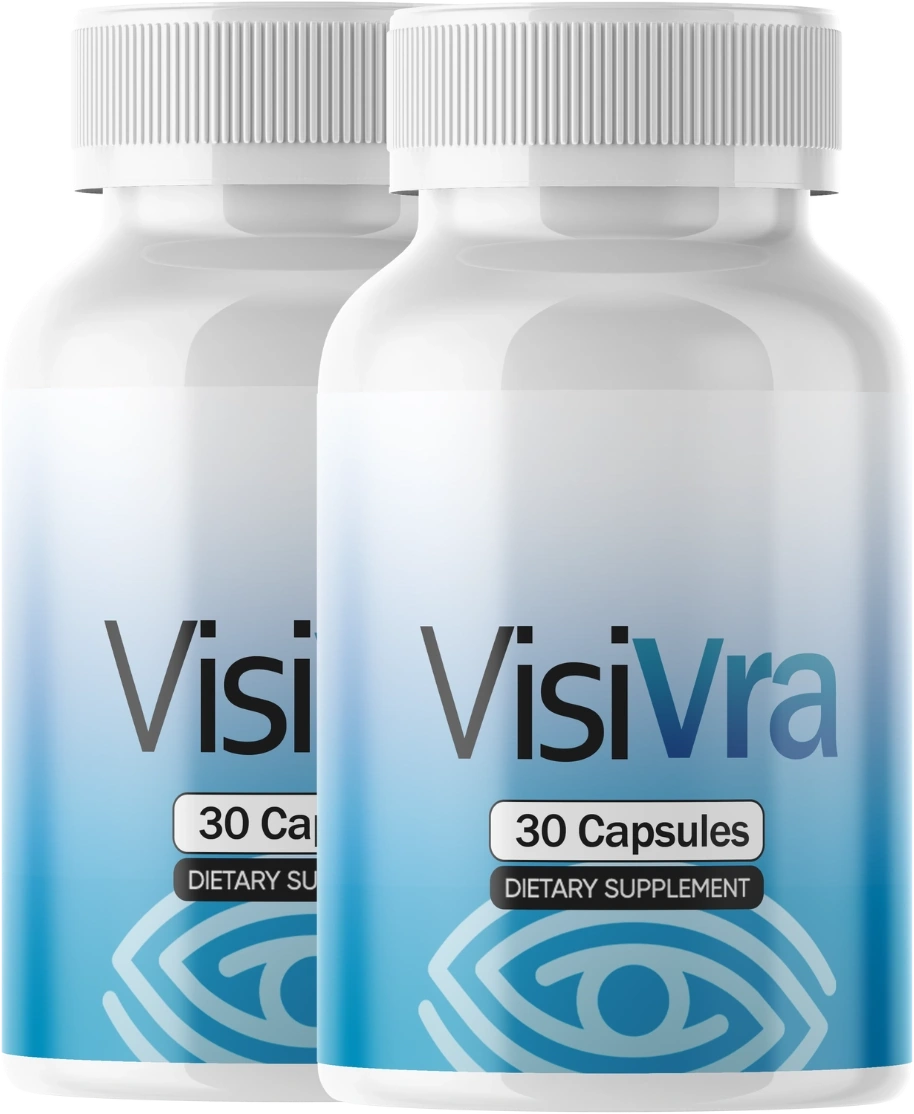
If you decide a trial period is reasonable, the order page shows each pack, the shipping and the 60-day guarantee before you commit.
See today’s price and guaranteeDisclosure: Govisivra earns money when a reader orders through this button. Prices were read from the seller’s page on September 19, 2026.
Does Visivra really work?
The straight answer is that we do not know, and neither does anyone who has only the label. That is not a dodge. It follows from one fact: Visivra names six actives and gives a figure for none of them.
In this category the amount is the evidence. A trial that gave 10 mg of lutein tells you about 10 mg of lutein. It tells you nothing about a capsule whose lutein content is a secret. So we can describe what each ingredient has been studied at, and we can say plainly that Visivra inherits none of it.
Here is what the label itself claims. It supports visual clarity. It promotes healthy retinal function. It maintains long-term eye wellness. It helps defend the eyes from blue light exposure. Those are the words the product is allowed to use. They are not disease claims, and they are not promises of a result.
How does Visivra work, in theory?
The theory comes from the ingredients, not from Visivra itself. Lutein and zeaxanthin are carotenoids. They are found in the macula, the small centre of the retina. Research shows that supplementing them raises macular pigment optical density, and that the rise depends on dose.
Bilberry is a berry extract studied for eye muscle function and screen fatigue. Astaxanthin is a red carotenoid with one small 2025 trial. Zinc and vitamin A are minerals and vitamins the eye uses.
Four of the six actives are fat-soluble. That is why the sensible way to take any such capsule is with a meal that has some fat in it. A controlled feeding study found that absorption rose with the oil in the meal.
In short: the idea is to top up pigments and nutrients the eye already uses. Whether a given capsule does that depends on what is in it. For Visivra, that figure is only held by the manufacturer.
What does the research say, ingredient by ingredient?
| Ingredient | On this label | What the trials used |
|---|---|---|
| Lutein | No figure given | 10 mg a day for five years in AREDS2, in people who already had intermediate macular degeneration |
| Zeaxanthin | No figure given | 2 mg a day in that trial, always alongside lutein |
| Bilberry extract | No figure given | 240 mg a day for twelve weeks; 480 mg a day for eight weeks in screen workers |
| Astaxanthin | No figure given | 4 mg a day for 84 days in a 2025 trial whose participants were children |
| Zinc | No figure, and no copper | 80 mg with 2 mg copper in AREDS; AREDS2 also ran a 25 mg arm |
| Vitamin A | No figure, no form | No trial amount to print; AREDS2 removed beta carotene from the formula |
Shown for comparison only. Visivra is not any of these formulas.
Look at that last row. The AREDS2 trial dropped beta carotene after two smoking cohorts, CARET and ATBC, found more lung cancer in the supplemented arm. At ten-year follow-up the odds ratio stood at 1.82. Visivra names vitamin A but states neither the form nor the amount.
Also look at who was studied. AREDS2 enrolled people who already had intermediate age-related macular degeneration, or the advanced form in one eye. It measured whether they progressed to late disease. Nothing in it shows healthy eyes seeing better.
What kind of improvement can a healthy eye expect?
Be careful here, because the usual yardstick is wrong. Reading a letter chart measures acuity. Trials in people free of retinal disease have found changes in contrast sensitivity instead. That is the ability to tell a faint shape from its background, such as a grey kerb in dim light.
So the honest picture is modest. A well-dosed carotenoid supplement may nudge macular pigment up and may help contrast in some people. It is not a route to throwing away your glasses.
Bilberry's long-told night-vision story did not survive placebo-controlled testing. Its modern use is about tired eyes at a screen.
If a page promises sharper sight in days, step away. The research does not support it, and neither does this label.
How long does Visivra take to work?
There is no published time for Visivra. The nearest facts are these. Customers in the desk's own summary most often say they waited three to four weeks. The trials behind the ingredients ran from twelve weeks to five years.
That gap is worth noticing. A month is a fair time to see how the routine suits you. It is a short time for pigment to build. The 60-day guarantee was set at a length that sits between the two.
- Week 1: you are only learning the routine. Do not expect a change.
- Weeks 3 to 4: the point at which customers report noticing anything at all.
- Day 60: the last day to ask for a refund, counted from the date on your order confirmation.
Is Visivra worth it?
That depends on what you want and what you can accept. It is worth trying if you want a simple daily eye-support habit, you understand the label has no amounts, and you are comfortable with the guarantee terms. It is probably not worth it if you want proof of a result, or if you hope it will treat an eye condition.
Price context helps. Packs start at two bottles for $158, three for $207 and six for $294, with shipping extra on two of the three. A six-bottle pack costs $49 a bottle and covers 180 days. That is a big commitment for a product you have not tried, so many buyers start smaller.
None of this replaces an eye exam. Visivra does not treat, prevent or slow macular degeneration, cataract or glaucoma, and it does not restore lost sight.
Frequently asked questions
Does Visivra work?
We cannot say. The six actives have research behind them, but Visivra gives no amounts, so no trial result can be assigned to it. Trials in healthy eyes found small gains in contrast sensitivity rather than sharper reading.
How does Visivra work?
The theory is to top up pigments and nutrients the eye already uses. Lutein and zeaxanthin sit in the macula, and supplements raise macular pigment in a dose-dependent way. Visivra's own amounts are not published.
How long does Visivra take to work?
No time is published. Customers in the desk's summary most often say they waited three to four weeks. The trials behind the ingredients ran from twelve weeks to five years.
Are there Visivra before and after results?
We hold no verified before and after photos or measurements, so none appear. Any single before and after story is one person with no comparison group.
Will Visivra improve my eyesight?
Do not expect that. Research in healthy eyes points to contrast sensitivity, not acuity. Visivra does not restore lost sight and does not treat macular degeneration, cataract or glaucoma.
Is Visivra worth the money?
It depends on what you can accept. It is a daily habit with a 60-day guarantee, but the label has no amounts. If you want proof of a result, wait and ask the maker for figures first.
A fair way to find out for yourself
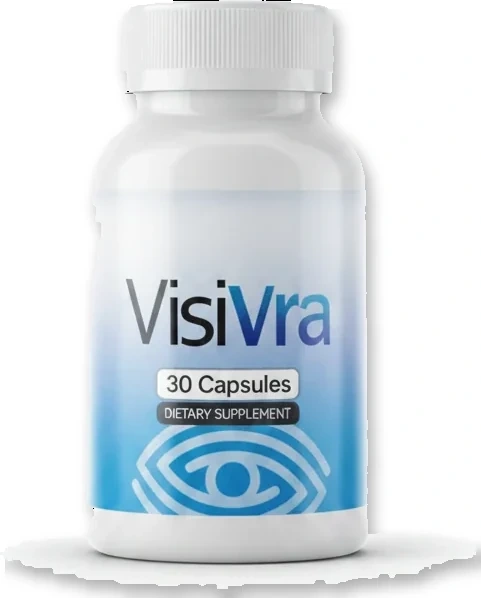
A bottle holds 30 capsules. Use the first month to see how the routine suits you, and keep the 60-day window in mind.
Two bottles $158 · three bottles $207 · six bottles $294 · 60-day money-back guarantee
See today’s price and guaranteeDisclosure: Govisivra earns money when a reader orders through this button. Prices were read from the seller’s page on September 19, 2026.
Our view
We think the fair way to put it is this. Visivra points at a sensible idea and sits behind a label that gives you nothing to check. That makes it hard to recommend and hard to dismiss.
If you try it, treat it like an experiment with a deadline. Take one capsule a day with a meal that has some fat in it, note how your eyes feel at a screen, and decide by day 60. Keep your eye exams. Do not stop any treatment your doctor gave you.
And if you have macular degeneration, glaucoma, cataract or diabetes, speak to your eye doctor before you add any supplement, because the doses in the research are specific and the risks are real.
Visivra is a dietary supplement. It is not a drug and it is not FDA approved, and no supplement is. This page does not treat, cure or prevent any eye disease, and it is not medical advice. If your sight has changed, book an eye exam. Sudden vision loss, new floaters or flashes, or eye pain need same-day care.
Sources named on this site
- The AREDS2 trial
- The CARET trial
- The ATBC trial
- A controlled feeding study
- A 12-week bilberry trial
- A study in screen workers
- A systematic review of the night-vision claim
- A 2025 astaxanthin trial
- A contrast-sensitivity trial
Keep reading
Last updated