Visivra Official Website › Choosing A Formula
Choosing A FormulaChoosing An Eye Supplement: Nine Questions
Visivra Team at Govisivra · physician review: Dr. Preston Sullivan, MD · last revised
Nine questions that separate an eye formula worth buying from one that is only well designed.
They are about the panel, the forms, the amounts, the pairings, the claims and the terms. At the end this guide scores the product this desk sells against all nine, including the three it does not pass.
A checklist built to be used in a shop aisle or a browser tab, on any bottle, by somebody with no background in nutrition.
Question one: is there a Supplement Facts panel?
This is the first question and it filters more products than the other eight together.
A panel is the box with the serving size, the amount of each ingredient, the percent daily value where one exists, and the other-ingredients line underneath. A label that carries one is telling you what you are buying. A label that names ingredients without a panel is telling you what is in the room.
Neither arrangement is illegal and neither is evidence of bad faith. But in this category the amount is the evidence, because every ingredient here earned its reputation at a specific dose in a specific trial. A name without a number cannot be compared with a trial, with another bottle, or with what you already take.
Questions two to four: the amounts that decide it
How much lutein, and how much zeaxanthin?
The reference points are 10 mg and 2 mg, from AREDS2. CREST used the same lutein figure. A bottle at a tenth of those amounts is a different product from one at those amounts, and only a panel lets you tell.
How much zinc, and is copper beside it?
AREDS gave 80 mg of zinc with 2 mg of copper and gave the copper deliberately, because sustained high-dose zinc drives copper down. AREDS2 later tested 25 mg. A formula with a large zinc figure and no copper is the combination to ask about.
Which form is the vitamin A, and how much?
Preformed retinol has an upper intake level. Beta carotene carries the smoking caution that CARET and ATBC established and that took it out of AREDS2. A label naming vitamin A without naming the form has left the most important word out.
Questions five and six: the ingredients that flatter a label
Two categories of ingredient appear on eye formulas mostly because they look right on a list.
The first is any botanical whose reputation rests on a story rather than a trial. Bilberry is the classic case, and it is instructive because the modern evidence is real and is about something else entirely: the night-vision claim did not survive placebo-controlled testing, while the focusing-muscle finding did. A label quoting the first is quoting folklore; a label quoting the second is quoting research.
The second is the ingredient present at an amount too small to do anything, which is the reason a panel matters even when the list is impeccable. Without a number, a formula naming eight actives and one naming three are indistinguishable, and the first one looks better.
Questions seven to nine: the claims and the terms
Does it claim to treat anything?
A dietary supplement may say it supports normal function. It may not say it treats, prevents or cures a disease. A bottle promising to reverse macular degeneration is making a claim the law does not allow and the evidence does not support.
Does it borrow a trial it is not?
Describing a product as an AREDS2 formula when it is not the AREDS2 formula at the AREDS2 amounts is the commonest overreach in this category. Check the amounts before accepting the comparison.
How long is the window, and from when?
Carotenoids move over months. A thirty-day guarantee in this category is not a test. Sixty is the short end, and the date it starts from, purchase or dispatch, is worth reading before you order.
Who answers the phone?
A published number, a real returns address and a lot code you can quote are worth more than any seal on the artwork, because all three can be used and a seal cannot.
Scoring Visivra against these nine questions
| Question | This product | Pass? |
|---|---|---|
| 1. Supplement Facts panel | None in any of the three documents | No |
| 2. Lutein amount | Held by the seller | No |
| 3. Zinc amount and copper | Zinc named, amount held by the seller, no copper named | No |
| 4. Vitamin A form and amount | Neither stated | No |
| 5. Botanical evidence quality | Bilberry cited for the ciliary-muscle and fatigue trials, not for night vision | Yes |
| 6. Ingredient selection | Six actives, the right two leading | Yes |
| 7. Claims kept inside the law | Four structure and function claims, no disease claim anywhere | Yes |
| 8. Trial borrowing | This site states plainly that the bottle is not the AREDS2 formula | Yes |
| 9. Terms | 60 days from purchase, published returns address, lot code, phone line | Yes |
Scored by this desk against its own checklist, on the product this desk sells. Four fails out of nine, and all four are the same fact counted four ways.
The honest summary is that this product passes every question about what is in the bottle and fails every question about how much. If a panel appeared tomorrow, four rows would change and nothing else about the product would have to.
Question nine is the one that separates this product from most of the shelf, and it is worth spelling out because the arithmetic runs the wrong way from what a buyer expects. The window here is sixty days from the date of purchase, not from delivery and not from dispatch. Purchase comes first, so the clock is running through the transit: a parcel that takes a week to arrive has already spent a week of it. That is the ordinary arrangement in this category and it is not a criticism of this seller, but it does mean a sixty-day window is not sixty days of taking capsules, and a buyer planning a fair test has to allow for the difference.
Whether that trade is acceptable is a real decision rather than a rhetorical one. If you want a known quantity of lutein, buy a bottle that prints one. If you want six sensible actives in a capsule with terms you can hold the seller to, this is that, and the pricing page is where the ladder is.
Sources for this checklist
Every one of the nine questions above traces back to one of these, which is what stops a checklist being a set of opinions.
- Age-Related Eye Disease Study 2 (AREDS2) Research Group: “Lutein + zeaxanthin and omega-3 fatty acids for age-related macular degeneration: the Age-Related Eye Disease Study 2 (AREDS2) randomized clinical trial”, JAMA 2013;309(19):2005-15, PMID 23644932. https://pubmed.ncbi.nlm.nih.gov/23644932/
- Nolan JM, Power R, Stringham J, et al: “Enrichment of macular pigment enhances contrast sensitivity in subjects free of retinal disease: Central Retinal Enrichment Supplementation Trials - report 1”, Invest Ophthalmol Vis Sci 2016;57(7):3429-39, PMID 27367585. https://pubmed.ncbi.nlm.nih.gov/27367585/
- Kosehira M, Machida N, Kitaichi N: “A 12-week-long intake of bilberry extract (Vaccinium myrtillus L.) improved objective findings of ciliary muscle contraction of the eye: a randomized, double-blind, placebo-controlled, parallel-group comparison trial”, Nutrients 2020;12(3):600, PMID 32106548. https://pubmed.ncbi.nlm.nih.gov/32106548/
- Canter PH, Ernst E: “Anthocyanosides of Vaccinium myrtillus (bilberry) for night vision - a systematic review of placebo-controlled trials”, Surv Ophthalmol 2004;49(1):38-50, PMID 14711439. https://pubmed.ncbi.nlm.nih.gov/14711439/
- Age-Related Eye Disease Study Research Group: “A randomized, placebo-controlled, clinical trial of high-dose supplementation with vitamins C and E, beta carotene, and zinc for age-related macular degeneration and vision loss: AREDS report no 8”, Arch Ophthalmol 2001;119(10):1417-36, PMID 11594942. https://pubmed.ncbi.nlm.nih.gov/11594942/
- Omenn GS, Goodman GE, Thornquist MD, et al: “Effects of a combination of beta carotene and vitamin A on lung cancer and cardiovascular disease”, N Engl J Med 1996;334(18):1150-5, PMID 8602180. https://pubmed.ncbi.nlm.nih.gov/8602180/
- Alpha-Tocopherol, Beta Carotene Cancer Prevention Study Group: “The effect of vitamin E and beta carotene on the incidence of lung cancer and other cancers in male smokers”, N Engl J Med 1994;330(15):1029-35, PMID 8127329. https://pubmed.ncbi.nlm.nih.gov/8127329/
- Institute of Medicine (US) Panel on Micronutrients: “Vitamin A”, In: Dietary Reference Intakes for Vitamin A, Vitamin K, Arsenic, Boron, Chromium, Copper, Iodine, Iron, Manganese, Molybdenum, Nickel, Silicon, Vanadium, and Zinc, Washington (DC): National Academies Press; 2001. https://www.ncbi.nlm.nih.gov/books/NBK222318/
Take the checklist to Visivra and decide for yourself
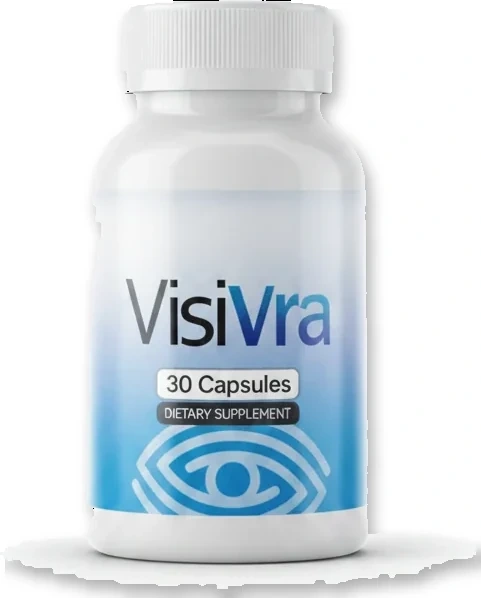
Five of nine questions passed, four failed, and all four are the same missing panel. The two-bottle pack is the tier that lets you test it with the money still recoverable.
Two bottles $158 · three bottles $207 · 60-day money-back guarantee
Order Visivra On The Official Website30 capsules a bottle · lot VIS-26/GO-1787 · ships from the U.S.