Visivra Official Website › Side Effects
Side EffectsVisivra Side Effects: The Two Ingredients to Check
Visivra Team at Govisivra · physician review: Dr. Preston Sullivan, MD · last revised
Most Visivra ingredients are quiet, and zinc and vitamin A are the two worth checking.
Lutein, zeaxanthin, bilberry and astaxanthin have no established upper limit and no common interaction in the trials cited here. Zinc and vitamin A depend on dose and form.
Read who Visivra suits before ordering.
What is known to be quiet, what depends on an amount nobody outside the factory can see, and the one call worth making before the first capsule.
What is genuinely quiet in Visivra
Four of the six actives have a long record of uneventful use at supplemental amounts, and it is worth starting there rather than with the cautions.
| Ingredient | Upper limit | What shows up in the trials |
|---|---|---|
| Lutein | None set in the US | Nothing beyond occasional mild digestive upset at very high intake. |
| Zeaxanthin | None set | Studied alongside lutein; the same picture. |
| Bilberry extract | None set | The eye-fatigue and ciliary-muscle trials reported no notable adverse events at 240 and 480 mg a day. |
| Astaxanthin | None set | The 2025 digital eye strain trial ran 4 mg a day for eighty-four days in children without a safety signal. |
No upper limit set is not the same as no limit exists. It means the evidence base has never been large enough for one to be derived, which is also why this desk prints no ceiling of its own invention.
There is one cosmetic effect worth knowing about. Very high carotenoid intake over months can tint the palms and soles yellow-orange. It is harmless, it is the same phenomenon as eating a great deal of carrot, and it reverses.
The zinc question on the Visivra label
This is the first of the two rows that needs a number, and the reason is physiological rather than regulatory.
Zinc and copper compete for the same intestinal transport. Sustained high-dose zinc raises the gut protein that binds both, and copper is bound preferentially and lost. That is why the original AREDS trial gave 80 mg of zinc with 2 mg of copper, and gave them together on purpose rather than as two ingredients that happened to be on the list.
What copper depletion looks like clinically is anaemia and low white cells, sometimes with neurological signs. A 2026 systematic review collects the descriptive cases, and one well-documented case traced it to a source nobody was watching. At the other end of the scale, a controlled trial in healthy boys found modest zinc intakes did not move sensitive copper markers at all.
The range across those studies is enormous: from an intake that changes nothing to one that produces a haematology referral. Where a Visivra capsule sits on that range is a single figure, the seller holds it, and no reader can work it out from the bottle. Anyone taking a separate zinc tablet or a multivitamin alongside this has two unknown quantities rather than one.
The vitamin A question on the Visivra label
The second row, and the one where the missing information is the form rather than the amount.
Two very different substances are sold as vitamin A. Preformed retinol is the animal form, is used directly, accumulates in the liver and has an adult upper intake level set for that reason. High long-term intake has been associated with higher fracture risk in a Swedish cohort and with hip fracture in the Iowa Women’s Health Study. Beta carotene is the plant precursor, is converted as needed, and does not accumulate the same way.
Beta carotene carries a different caution entirely, and it is the one that reshaped this whole category. CARET gave beta carotene 30 mg with retinol and was stopped early; ATBC gave 20 mg a day. Both reported more lung cancer in smokers taking it. When AREDS2 was designed, beta carotene was taken out of the formula, and the ten-year follow-up put the odds ratio for lung cancer in the beta carotene arm at 1.82.
If you smoke or used to, establish which form of vitamin A this capsule uses before taking it. The order desk is the order desk (its number is in the site footer) and the order desk’s email (listed in the site footer). This desk has asked and will publish the answer on this page when it has one. Until then the caution stands, because the safe assumption is the one that costs nothing.
Who should not take Visivra
- Anyone under 18. The label is for adults.
- Anyone pregnant or nursing. Vitamin A has specific considerations in pregnancy and neither the form nor the amount is stated.
- Anyone who smokes or used to, until the vitamin A form has been confirmed.
- Anyone already taking an AREDS2 product, a multivitamin or a zinc tablet, without first adding up what the other label says.
- Anyone with a new visual symptom. That is an appointment, and it is urgent for several of the things it might be.
Beyond that list, the practical advice is unremarkable: take it with food, stop if something new appears, and mention it at your next appointment the way you would mention any supplement.
What the Visivra label prints about safety
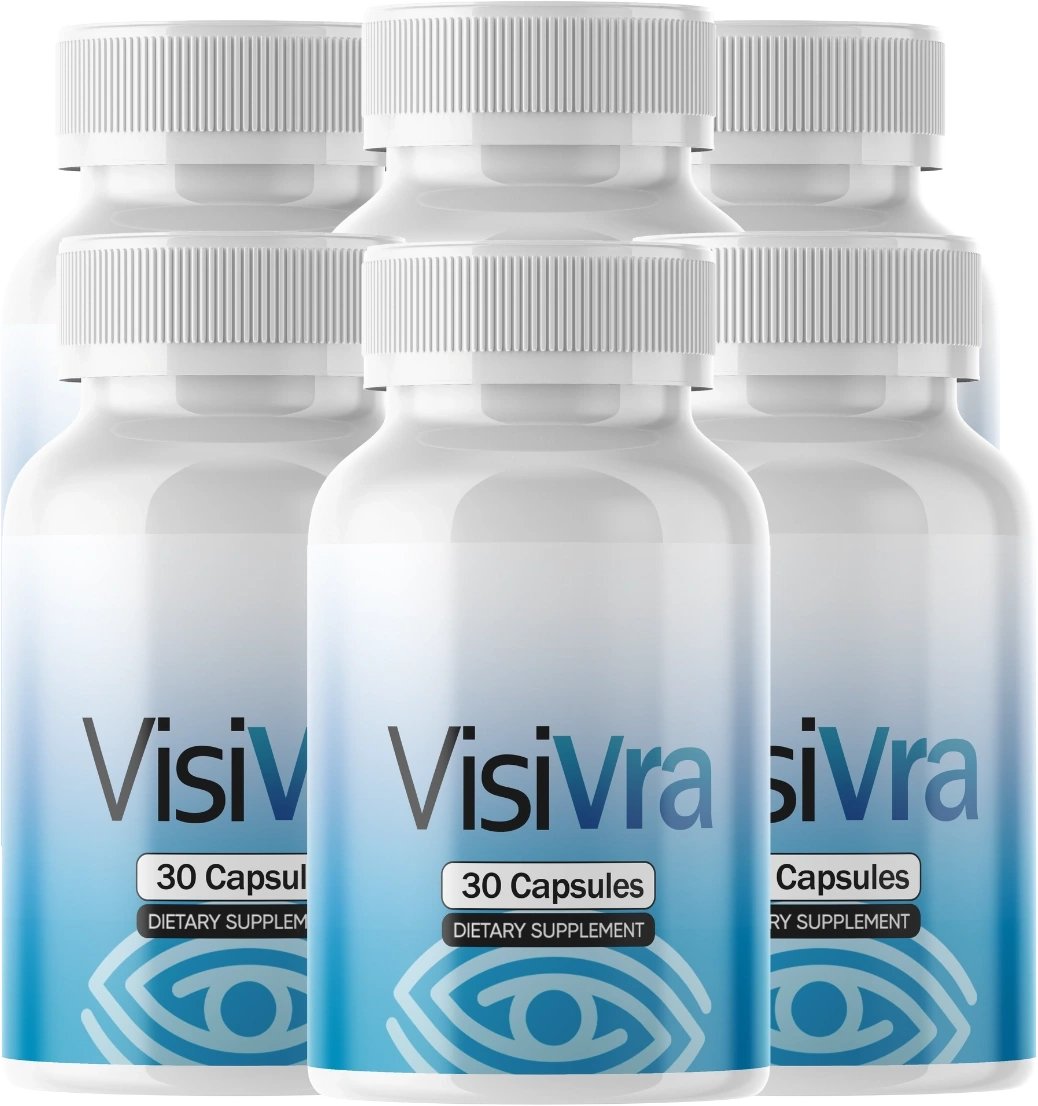
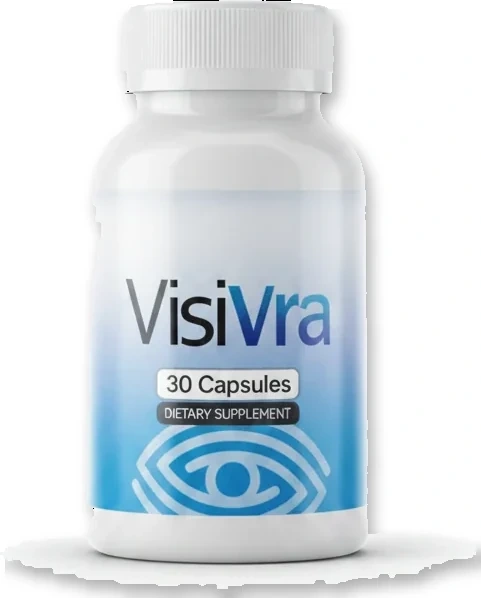
One line, and it is worth reproducing exactly because it is the whole of the fine print on the artwork.
These statements have not been evaluated by the Food and Drug Administration. This product is not intended to diagnose, treat, cure or prevent any disease.Printed on the front panel
No consult-a-clinician caution is printed anywhere on this label, which is unusual in this category. Most bottles carry one. This desk is not going to invent one and attribute it to the manufacturer, so the sentence above is reproduced as the only safety text the artwork gives, and the cautions elsewhere on this page are attributed to the research they come from.
Visivra safety questions
Does Visivra upset the stomach?
A fat-soluble capsule taken on an empty stomach is the usual cause when it does. Move it to the middle of a meal rather than the start and it generally settles.
Can carotenoids turn your skin orange?
Beta carotene at high intake can, and the tint is cosmetic and reverses when intake drops. Lutein and zeaxanthin at supplemental amounts rarely do it. The amounts here are the seller’s figures, so this is a theoretical note rather than a warning.
Is there caffeine or a stimulant in it?
Nothing on the named list is a stimulant. Six actives are named and all six are carotenoids, a botanical extract or a nutrient.
Can I take it with blood thinners?
None of the six has a well-documented anticoagulant interaction. Anyone on warfarin already knows that a change in diet or supplements is worth mentioning at the next INR check, and this is one of those changes.
What should make me stop taking it?
Any new visual symptom, a rash, or persistent stomach upset that does not settle when the capsule moves to the middle of a meal. A new visual symptom is an appointment regardless of what you are taking.
Who publishes this Visivra website?
The Institute of Medicine chapters are used for the upper intake levels because the NIH fact-sheet pages answer scripted requests with a block, and a source that can be read beats one nobody can check.
- Age-Related Eye Disease Study 2 (AREDS2) Research Group: “Lutein + zeaxanthin and omega-3 fatty acids for age-related macular degeneration: the Age-Related Eye Disease Study 2 (AREDS2) randomized clinical trial”, JAMA 2013;309(19):2005-15, PMID 23644932. https://pubmed.ncbi.nlm.nih.gov/23644932/
- Age-Related Eye Disease Study Research Group: “A randomized, placebo-controlled, clinical trial of high-dose supplementation with vitamins C and E, beta carotene, and zinc for age-related macular degeneration and vision loss: AREDS report no 8”, Arch Ophthalmol 2001;119(10):1417-36, PMID 11594942. https://pubmed.ncbi.nlm.nih.gov/11594942/
- Dutta A, Chaudhary V, Kumari S, et al: “Zinc-induced hematologic toxicities: a systematic review of descriptive studies”, Biol Trace Elem Res 2026;204(9):6628-6642, PMID 42087025. https://pubmed.ncbi.nlm.nih.gov/42087025/
- Amisha F, Saluja P, Gautam N, et al: “Acquired hyperzincaemia due to zinc-laden denture adhesives leading to hypocupraemia as a cause of neutropenia”, Eur J Case Rep Intern Med 2021;8(11):002983, PMID 34912740. https://pubmed.ncbi.nlm.nih.gov/34912740/
- Bertinato J, Simpson JR, Sherrard L, et al: “Zinc supplementation does not alter sensitive biomarkers of copper status in healthy boys”, J Nutr 2013;143(3):284-9, PMID 23303874. https://pubmed.ncbi.nlm.nih.gov/23303874/
- Omenn GS, Goodman GE, Thornquist MD, et al: “Effects of a combination of beta carotene and vitamin A on lung cancer and cardiovascular disease”, N Engl J Med 1996;334(18):1150-5, PMID 8602180. https://pubmed.ncbi.nlm.nih.gov/8602180/
- Alpha-Tocopherol, Beta Carotene Cancer Prevention Study Group: “The effect of vitamin E and beta carotene on the incidence of lung cancer and other cancers in male smokers”, N Engl J Med 1994;330(15):1029-35, PMID 8127329. https://pubmed.ncbi.nlm.nih.gov/8127329/
- Chew EY, Clemons TE, Agron E, et al: “Long-term outcomes of adding lutein/zeaxanthin and omega-3 fatty acids to the AREDS supplements on age-related macular degeneration progression: AREDS2 report 28”, JAMA Ophthalmol 2022;140(7):692-698, PMID 35653117. https://pubmed.ncbi.nlm.nih.gov/35653117/
- Michaelsson K, Lithell H, Vessby B, et al: “Serum retinol levels and the risk of fracture”, N Engl J Med 2003;348(4):287-94, PMID 12540641. https://pubmed.ncbi.nlm.nih.gov/12540641/
- Lim LS, Harnack LJ, Lazovich D, et al: “Vitamin A intake and the risk of hip fracture in postmenopausal women: the Iowa Women's Health Study”, Osteoporos Int 2004;15(7):552-9, PMID 14760518. https://pubmed.ncbi.nlm.nih.gov/14760518/
- Institute of Medicine (US) Panel on Micronutrients: “Vitamin A”, In: Dietary Reference Intakes for Vitamin A, Vitamin K, Arsenic, Boron, Chromium, Copper, Iodine, Iron, Manganese, Molybdenum, Nickel, Silicon, Vanadium, and Zinc, Washington (DC): National Academies Press; 2001. https://www.ncbi.nlm.nih.gov/books/NBK222318/
Order Visivra once the two questions are settled
Four of the six actives are quiet at any sensible intake. The other two are worth one phone call before the first capsule, and the number is on every page here.
Two bottles $158 · three bottles $207 · 60-day money-back guarantee
Order Visivra On The Official Website30 capsules a bottle · lot VIS-26/GO-1787 · ships from the U.S.