Visivra Official Website › Eye Health Guide
Eye Health GuideThe Eye Health Guide: What Matters, And In What Order
Visivra Team at Govisivra · physician review: Dr. Preston Sullivan, MD · last revised
An eye examination finds the things that actually cost people their sight. A supplement does not.
This guide sets out what the macula is, what an examination looks for, which conditions are silent until they are advanced, and where a carotenoid capsule genuinely fits. It is written to be useful whether or not you buy anything.
Written for somebody who has started noticing headlights, screens or small print and is trying to work out whether that is a nuisance or a symptom.
The macula, in one page
The retina lines the back of the eye and converts light into signals. Almost all of your detailed vision comes from a patch in the middle of it about five millimetres across, called the macula, and the very centre of that patch, the fovea, is where the photoreceptors are packed most tightly.
Two things about the macula explain most of this category. It has the highest metabolic demand of any tissue in the body by weight, which means it generates a great deal of oxidative stress simply by working. And it carries a yellow pigment layer, built from three carotenoids, sitting in front of the photoreceptors where it absorbs short-wavelength light and behaves as an antioxidant.
The body makes none of those carotenoids. Lutein and zeaxanthin arrive through food, and the third, meso-zeaxanthin, is converted from lutein in the retina itself. That is the whole biological basis for an eye supplement: a pigment layer built entirely from what you eat.
What an eye examination actually looks for
Most people think of an eye test as a way of getting new spectacles. That is the least important thing it does.
| What is checked | How | Why it matters |
|---|---|---|
| Visual acuity | The letter chart | Establishes the prescription. The part everyone expects. |
| Intraocular pressure | A puff of air or a probe | One of the markers for glaucoma, which damages peripheral vision silently for years. |
| The optic nerve head | Looking into the eye, often through a dilated pupil | Glaucoma again, and several neurological conditions. |
| The macula | The same examination, or a retinal photograph | Where age-related macular degeneration is first seen, usually by somebody else. |
| The retinal blood vessels | The same look | Diabetic changes and hypertensive changes are found here before they are felt. |
| The visual field | A field test where indicated | Peripheral loss you cannot notice yourself, because the brain fills it in. |
Which of these are done depends on your age, your history and what you report. All of them are routine.
The pattern in that table is the point. Four of the six find conditions that produce no symptom until they are advanced, and for two of them the treatment that works is only available early. The National Eye Institute sets out the schedule and the reasoning.
The conditions that are silent until they are not
Glaucoma
Damages the optic nerve, usually starting in the periphery. The brain fills in the missing field so convincingly that people routinely lose half of it before noticing. Treatment slows it; nothing restores what has gone.
Age-related macular degeneration
The central patch degrades, first as small deposits visible only on examination. The wet form can be treated and the treatment window is short. The AREDS trials exist because of how hard the dry form is to slow.
Diabetic retinopathy
Changes in the retinal vessels long before vision alters. Anyone with diabetes is on an annual screening schedule for exactly that reason.
Cataract
The lens clouds gradually. This one is not silent, but it is slow enough that people adapt without noticing, and it is the most straightforwardly fixable of the four.
A supplement has nothing to do with any of them. That is not a criticism of supplements; it is what the examination is for, and a capsule taken instead of a booking is the one genuinely harmful thing in this category.
Where a carotenoid supplement genuinely fits
Having said all of that, there is a real place for one, and it is narrower than the marketing and wider than nothing.
The pigment layer is built from diet. Western diets are, on average, short on the foods that carry lutein and zeaxanthin densely: kale, spinach, sweetcorn and egg yolk. Somebody who eats none of those in a typical week is getting very little, and the body cannot make the difference up. Supplementation raises the layer in a dose-dependent way, which is a measurable structural change.
What that change produces, when it has been measured in people with healthy retinas, is contrast sensitivity and glare recovery. The CREST trial measured it over twelve months and a second trial agreed on the direction. Those are the things people notice at night, in fog, and on a low-contrast screen, and they are not what the letter chart measures.
What it does not do is prevent disease in healthy eyes. The Cochrane review on prevention looked and did not find it, and the companion review deals with slowing progression in people who already have it, which is a different population and a different formula.
AREDS and AREDS2, and why every eye label mentions them
Two trials underpin the entire shelf, and they are routinely described in a way that does not survive reading them.
AREDS, reported in 2001, gave high-dose vitamins C and E, beta carotene and zinc 80 mg with copper 2 mg, to people who already had age-related macular degeneration or were at high risk of it. It measured progression to the advanced form. The cataract arm found nothing.
AREDS2, reported in 2013, modified that formula: it added lutein 10 mg and zeaxanthin 2 mg, tested a lower zinc arm, and removed the beta carotene. The secondary analyses are where the lutein and zeaxanthin case is strongest, and the ten-year follow-up reported the outcome that removal was made for.
Both trials enrolled people with existing disease and measured whether it got worse more slowly. Neither showed that healthy eyes see better. A bottle that borrows the ingredient list without borrowing the population is describing something the trials did not test.
Five things that help before a supplement does
- A current spectacle prescription. An out-of-date one produces exactly the symptoms people buy eye supplements for.
- Screen distance and brightness matched to the room. The Cochrane review of blue-light lenses is a useful corrective on how little the popular fix achieves.
- A break every twenty minutes, looking at something twenty feet away for twenty seconds. It costs nothing and it works on the muscle that is actually tired.
- Not smoking. It is the largest modifiable risk factor for macular degeneration by a wide margin.
- Eating the pigments. Kale, spinach, sweetcorn and egg yolk, and egg yolk is the most absorbable because the carotenoid arrives dispersed in fat.
A desk selling a capsule has an obvious reason not to lead with that list. It leads with it because the list is true, and because a reader who has done all five and still notices glare is the reader for whom the capsule is worth anything.
Sources for this guide
The public patient-facing pages among these have nothing to sell, and they are the best starting point for anyone reading further.
- Age-Related Eye Disease Study 2 (AREDS2) Research Group: “Lutein + zeaxanthin and omega-3 fatty acids for age-related macular degeneration: the Age-Related Eye Disease Study 2 (AREDS2) randomized clinical trial”, JAMA 2013;309(19):2005-15, PMID 23644932. https://pubmed.ncbi.nlm.nih.gov/23644932/
- Age-Related Eye Disease Study 2 (AREDS2) Research Group, Chew EY, Clemons TE, et al: “Secondary analyses of the effects of lutein/zeaxanthin on age-related macular degeneration progression: AREDS2 report No 3”, JAMA Ophthalmol 2014;132(2):142-9, PMID 24310343. https://pubmed.ncbi.nlm.nih.gov/24310343/
- Nolan JM, Power R, Stringham J, et al: “Enrichment of macular pigment enhances contrast sensitivity in subjects free of retinal disease: Central Retinal Enrichment Supplementation Trials - report 1”, Invest Ophthalmol Vis Sci 2016;57(7):3429-39, PMID 27367585. https://pubmed.ncbi.nlm.nih.gov/27367585/
- Stringham JM, O'Brien KJ, Stringham NT: “Contrast sensitivity and lateral inhibition are enhanced with macular carotenoid supplementation”, Invest Ophthalmol Vis Sci 2017;58(4):2291-2295, PMID 28431432. https://pubmed.ncbi.nlm.nih.gov/28431432/
- Feng L, Nie K, Jiang H, et al: “Effects of lutein supplementation in age-related macular degeneration”, PLoS One 2019;14(12):e0227048, PMID 31887124. https://pubmed.ncbi.nlm.nih.gov/31887124/
- Age-Related Eye Disease Study Research Group: “A randomized, placebo-controlled, clinical trial of high-dose supplementation with vitamins C and E, beta carotene, and zinc for age-related macular degeneration and vision loss: AREDS report no 8”, Arch Ophthalmol 2001;119(10):1417-36, PMID 11594942. https://pubmed.ncbi.nlm.nih.gov/11594942/
- Chew EY, Clemons TE, Agron E, et al: “Long-term outcomes of adding lutein/zeaxanthin and omega-3 fatty acids to the AREDS supplements on age-related macular degeneration progression: AREDS2 report 28”, JAMA Ophthalmol 2022;140(7):692-698, PMID 35653117. https://pubmed.ncbi.nlm.nih.gov/35653117/
- Age-Related Eye Disease Study Research Group: “A randomized, placebo-controlled, clinical trial of high-dose supplementation with vitamins C and E and beta carotene for age-related cataract and vision loss: AREDS report no 9”, Arch Ophthalmol 2001;119(10):1439-52, PMID 11594943. https://pubmed.ncbi.nlm.nih.gov/11594943/
- Evans JR, Lawrenson JG: “Antioxidant vitamin and mineral supplements for slowing the progression of age-related macular degeneration”, Cochrane Database Syst Rev 2023;9(9):CD000254, PMID 37702300. https://pubmed.ncbi.nlm.nih.gov/37702300/
- Evans JR, Lawrenson JG: “Antioxidant vitamin and mineral supplements for preventing age-related macular degeneration”, Cochrane Database Syst Rev 2017;7(7):CD000253, PMID 28756617. https://pubmed.ncbi.nlm.nih.gov/28756617/
- Singh S, Keller PR, Busija L, et al: “Blue-light filtering spectacle lenses for visual performance, sleep, and macular health in adults”, Cochrane Database Syst Rev 2023;8(8):CD013244, PMID 37593770. https://pubmed.ncbi.nlm.nih.gov/37593770/
- National Eye Institute: “Age-Related Eye Disease Studies (AREDS/AREDS2)”, National Institutes of Health. https://www.nei.nih.gov/research/clinical-trials/age-related-eye-disease-studies-aredsareds2
- National Eye Institute: “Age-Related Macular Degeneration (AMD)”, National Institutes of Health. https://www.nei.nih.gov/learn-about-eye-health/eye-conditions-and-diseases/age-related-macular-degeneration
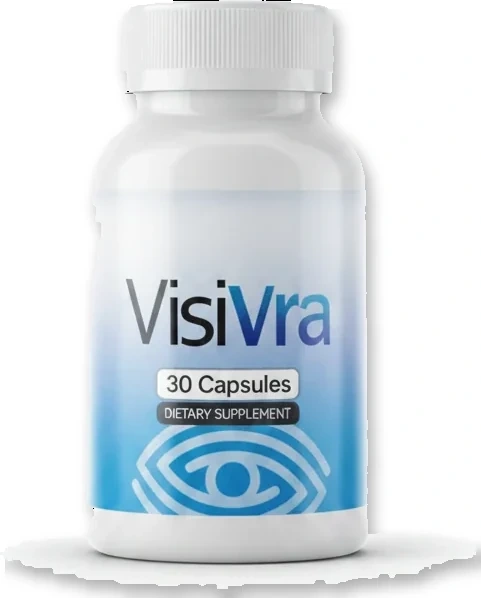
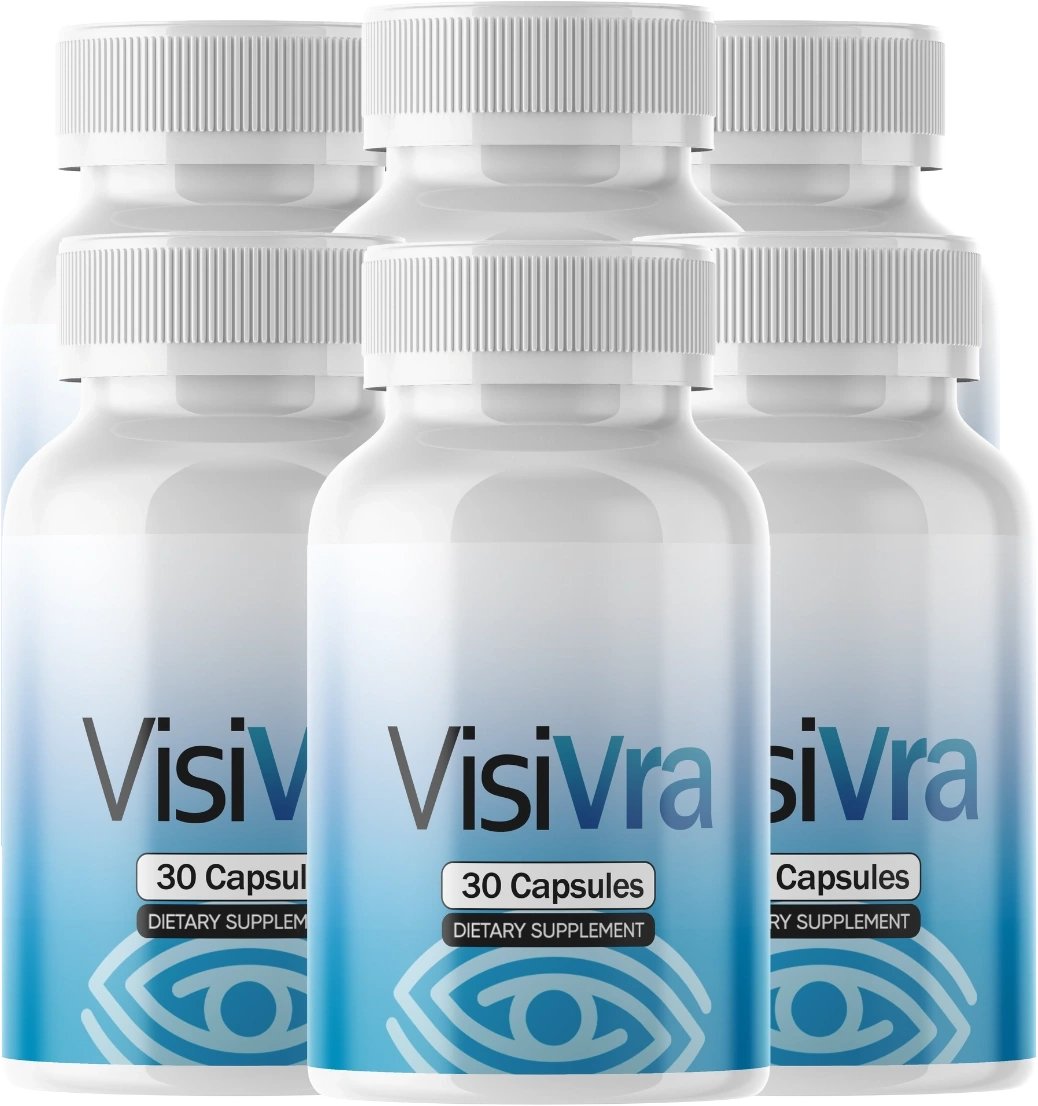
If a carotenoid capsule is the right next step, Visivra is here
Six named actives, one a day, and sixty days from purchase to decide. Book the examination first, though. It is the part of this page that matters most.
Two bottles $158 · three bottles $207 · 60-day money-back guarantee
Order Visivra On The Official Website30 capsules a bottle · lot VIS-26/GO-1787 · ships from the U.S.